 How-to
How to Verify Contractor License in California
Table of Contents
- Why Verifying a Contractor License Matters Before You Hire
- Understanding California's Contractor Licensing System
- How to Access California Contractor License Lookup Tools
- Searching by License Number: Step-by-Step Instructions
- Searching by Contractor or Business Name
- How to Check Contractor License Status in California
- Verifying License Classifications, Bond, and Insurance
- How to Look Up an Electrician License in California
- Frequently Asked Questions
Last Updated: October 8, 2026
Why Verifying a Contractor License Matters Before You Hire
Hiring a contractor without checking credentials is a massive risk.
Before you hand over money for any construction project, verify contractor license California status.
When a contractor's license checks out, you know they've passed exams, maintained bonding requirements, and stayed current with state regulations.
Checking a contractor's license takes minutes. You just need to know where to look and what to verify.
Understanding California's Contractor Licensing System
The Contractors State License Board (CSLB) oversees all contractor licensing in California.
California requires contractors to hold a valid license before they can legally bid on, negotiate, or perform construction work.
The CSLB maintains a public database of all licensed contractors, your official source for verification.
License classifications vary: a general contractor license covers broad construction work, an electrician license covers only electrical work, and a roofing license covers only roofing.
How to Access California Contractor License Lookup Tools
The official CSLB website is your primary resource. You can search the contractor license database directly online at no cost.
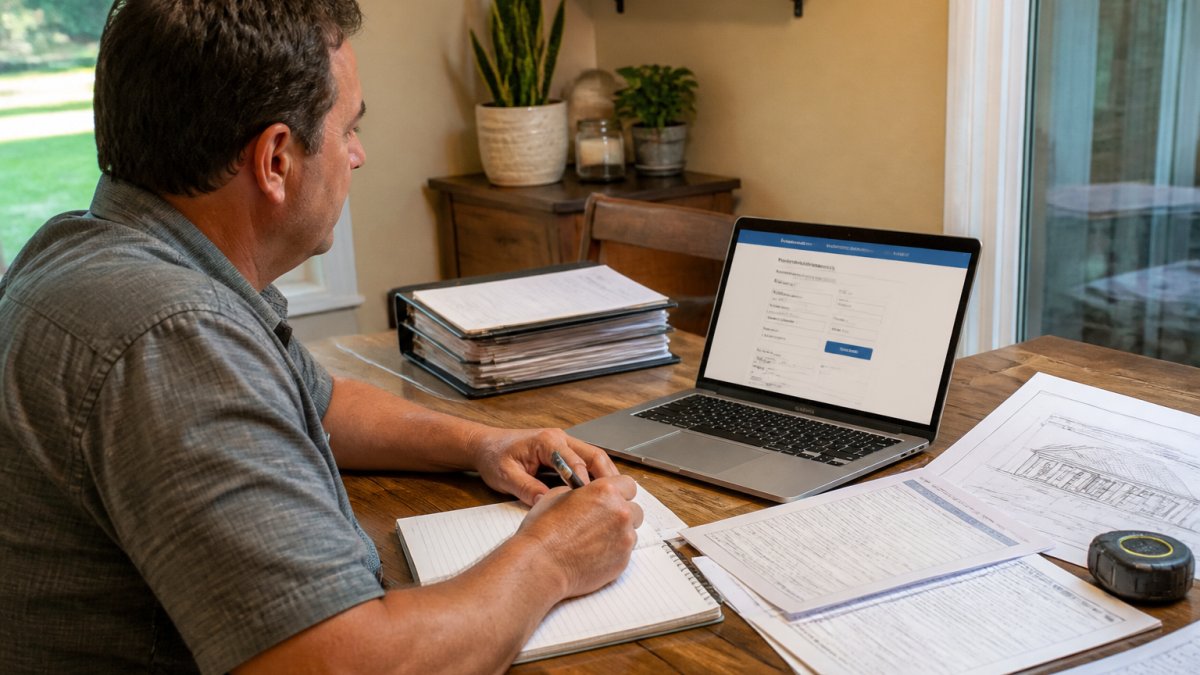
Visit the CSLB's official online license lookup tool and enter either a license number or a contractor's name.
The database shows:
- License number and status (active, inactive, expired, suspended)
- License classification (what type of work they're licensed to perform)
- Contractor name and business entity
- License issue and expiration dates
You can also call the CSLB directly for phone verification. Many contractors provide their license number upfront; if yours doesn't, ask for it.
Searching by License Number: Step-by-Step Instructions
Searching by license number is the fastest way to verify a contractor.
Step 1: Go to the CSLB website
Navigate to the official Contractors State License Board website and find the "License Lookup" or "Verify a License" section.
Step 2: Select "License Number" as your search method
Choose "License Number" from the dropdown menu.
Step 3: Enter the license number
Type it exactly as provided and double-check for typos, one wrong digit returns no results.
Step 4: Click Search
The system returns the contractor's full record if the license exists and is current.
Step 5: Review the results
Check the license status first.
Searching by Contractor or Business Name
If you don't have a license number, search by the contractor's name instead, slower but just as effective.
Step 1: Go to the CSLB website and select "Contractor Name" as your search method
Step 2: Enter the name
Type the name as you know it.
Step 3: Review the search results
The system may return multiple similar names.
Step 4: Click on the contractor's record
Click the correct contractor's name to open their full license details.
Get Started Today Free Estimate →
Step 5: Verify all key information
Check the license status, classification, and expiration date as with a license number search.
How to Check Contractor License Status in California
License status is the most important field in the registry, but the label alone doesn't tell you whether the contractor can legally work today.
The statuses you will see, and what each one actually means
- Active (also shown as "Licensed" or "Clear"): Current, renewal requirements met, no active suspension or revocation. The only status that permits legal contracting work.
- Inactive: Placed on inactive status or lapsed without renewal. Inactive licensees cannot legally bid, contract, or perform work. Until the registry says Active, do not sign anything.
- Expired: The renewal window closed without payment. Treat an expired license as a stop sign until the record flips back to Active.
- Suspended: The Board has temporarily pulled the right to work, often for failure to maintain a bond, carry workers' compensation coverage, pay fees, or resolve disciplinary matters. Do not hire during a suspension.
Read the dates, not just the label
The registry shows an expiration date and, on many records, a status date. Two habits matter:
- Check the expiration date against your project timeline. A license expiring in three weeks is a problem if your project runs three months. Ask the contractor to confirm renewal before you sign, and re-check the week work begins.
- Re-verify on the day you sign and again on the first day of work. Status can change between your initial search and the start date; a screenshot from last month is not proof of current standing.
What "Active" does not tell you
An active status confirms the license is in good standing with the Board.
If the status is anything other than Active
Ask the contractor in writing why the status is not Active and when it will change.
Verifying License Classifications, Bond, and Insurance
A valid license is necessary but not sufficient.
License classification: does the license cover your scope of work?
The Board issues licenses by classification, and each authorizes a defined scope of work.
- Class A, General Engineering Contractor: Fixed works such as roads, dams, bridges, sewers, and site grading.
- Class B, General Building Contractor: Framing, carpentry, and structural work. A B licensee can take a prime contract but must subcontract specialty trades (electrical, plumbing, HVAC) to appropriately licensed contractors unless they also hold that specialty.
- Class C, Specialty Contractor: Dozens of narrow classifications, including C-10 Electrical, C-36 Plumbing, C-39 Roofing, C-33 Painting, C-15 Flooring, C-20 HVAC, C-46 Solar, and C-53 Pool. A C-10 electrician cannot legally frame a house; a C-39 roofer cannot legally run new electrical circuits.
How to read the classification field against your project
- Write down the specific trades your project requires (demolition, framing, electrical rough-in, drywall, tile, finish electrical).
- Match each trade to a classification: structural and framing work generally points to a B license; electrical to C-10; plumbing to C-36; roofing to C-39; HVAC to C-20.
- Confirm the record shows the classification covering the primary trade, and that the contractor either holds specialty classifications for other trades or will subcontract to licensed specialty contractors.
- Ask in writing which classifications they hold and which portions they will subcontract.
Surety bond: what it actually protects
The Board requires licensed contractors to maintain a surety bond (Bond Requirements).
On the registry record, the bond field typically shows the bond amount, surety company, and effective or expiration date. What to do with that information:
- Confirm a bond is on file and not expired. No bond, or a bond past expiration, means the contractor is out of compliance.
- Understand the bond amount is a ceiling, not a guarantee. It is a fixed statutory figure, generally far smaller than the cost of a major remodel. Do not treat it as a substitute for a written contract, staged payments, or due diligence.
- Ask for the surety company name and bond number in writing before work begins. You will need those details to file a claim.
Workers' compensation insurance: who pays if a worker is hurt on your property?
- Active workers' compensation policy: Ask for a certificate of insurance and confirm it is current. It should name the insurer, policy number, and effective dates.
- Exemption shown: Typically means no employees and a sole proprietor. It does not mean they lack general liability, those are separate. Ask directly and request a certificate.
- No coverage and no exemption: A stop sign. The contractor is out of compliance with a licensing requirement.
Complaints and disciplinary history: read the pattern, not the count
The registry record may show complaints and disciplinary actions. A single complaint does not disqualify a contractor, even good contractors have disputes. What matters is the pattern:
- Multiple complaints about the same issue (repeated failure to complete work, overcharging, or abandonment) suggest a systemic problem.
- Disciplinary actions such as citations, fines, suspensions, or revocations are more serious than complaints. A minor paperwork citation differs from a revocation for fraud.
- Recency matters. A complaint from ten years ago carries less weight than three in the last eighteen months.
Turning the record into a go/no-go decision
Before you sign, confirm all of the following on the registry record and in writing from the contractor:
- Status is Active, and the expiration date extends past your project completion.
- Classification covers the primary trade, and specialty trades are covered by the contractor's own classifications or subcontracted to licensed specialty contractors.
- A current surety bond is on file, with the surety company and bond number documented.
- Workers' compensation coverage is active, or an exemption is shown and general liability coverage is separately documented.
- No pattern of complaints or disciplinary actions suggesting a systemic problem.
- The name and business entity on the registry record match your written contract.
If any check fails, do not sign.
How to Look Up an Electrician License in California
Electrician licenses follow the same verification process as general contractor licenses, but have additional classifications:
- Journeyman Electrician - Can perform most electrical work under supervision or as a sole proprietor
- Master Electrician - Can supervise other electricians and design electrical systems
- Specialty Electrician - Licensed for specific electrical work (solar, fire alarm, etc.)
Confirm the electrician holds the right classification for your work. Solar panel installation requires a solar specialty license; upgrading your main electrical panel requires a journeyman or master electrician.
The verification process is identical to any contractor license:
- Visit the CSLB website
- Search by license number or electrician name
- Verify the license is active
- Confirm the classification matches your project
- Check bond and workers' compensation status
- Review any complaints or disciplinary history
Electricians work with high-voltage systems. A licensed electrician has passed rigorous exams and meets safety standards; an unlicensed one puts your home at serious risk of fire, shock, or code violations.
Before you hire any contractor, whether for a full remodel, electrical work, or a custom deck, take 10 minutes to verify their license. Start your verification today through the official Contractors State License Board database, and hire with confidence.
Frequently Asked Questions
What is the California State Contractors Board (CSLB)?
The California State Contractors Board (CSLB) is the state agency responsible for licensing and regulating construction contractors. It maintains the official registry of all licensed contractors, issues licenses for different classifications of work, and handles consumer complaints and disciplinary actions. When you verify a contractor license in California, you're checking records maintained by the CSLB. The board ensures contractors meet experience, education, and examination requirements before they can legally operate.
How do I verify a contractor's license number in California?
Visit the CSLB's official online license search at the state licensing agency website. Enter the contractor's license number in the search field and click search. The results will display the contractor's name, license classification, issue and expiration dates, and current status. If you have the license number from a bid or contract, this is the fastest way to verify it. The search returns official records instantly, confirming whether the license is active and what type of work the contractor is authorized to perform.
What should I do if a contractor's license is expired or suspended?
Do not hire a contractor with an expired or suspended license. An expired license means the contractor has not renewed their credentials and is not legally authorized to perform construction work. A suspended license indicates the CSLB has taken disciplinary action, often due to complaints, violations, or failure to meet requirements. Either status is a red flag. Request an updated license number, ask when they plan to renew, or consider hiring a different contractor with an active, current license to protect your project and finances.
Can I verify a contractor's license status over the phone?
Yes, you can call the CSLB directly to verify a license. However, the online search is faster and gives you instant access to detailed records you can review yourself. If you use phone verification, have the contractor's license number or full business name ready. The CSLB can confirm whether a license is active, what classifications it covers, and whether there are any disciplinary actions on record. Online verification is recommended as your first step, with phone follow-up only if you have questions about the online results.