 blog
Commercial Space Remodeling Contractors: A Local Guide
Table of Contents
- What Commercial Remodeling Contractors Do
- Getting a Commercial Remodeling Estimate
- Commercial Renovation Timeline: What to Expect
- Commercial Construction Project Management Essentials
- Durable Flooring for High-Traffic Commercial Spaces
- Keeping Your Business Running During Remodeling
- How to Choose the Right Commercial Contractor
- Frequently Asked Questions
Last Updated: October 11, 2026
What Commercial Remodeling Contractors Do
Commercial remodeling contractors transform business spaces through structural modifications, systems upgrades, and functional redesigns that keep your business competitive and compliant.
Commercial remodeling contractors handle office renovations, retail improvements, kitchen installations, and tenant improvements, managing everything from design through final inspection while coordinating trades, ensuring code compliance, and minimizing operational disruption.
Scope varies from reconfiguring floor plans to upgrading mechanical systems, electrical infrastructure, or accessibility features. A skilled commercial remodeling contractor understands both technical requirements and business impact.
Experienced contractors balance quality, timeline, and budget while navigating permitting, coordinating inspections, and adapting to unexpected conditions.
Getting a Commercial Remodeling Estimate
A comprehensive estimate begins with a thorough walkthrough documenting existing conditions, identifying obstacles, and understanding your vision.
Quality estimates include itemized breakdowns (labor, materials, permits, contingency), timelines, material specifications, and clarification on handling unexpected issues.
Request estimates from multiple contractors, comparing not just pricing but how thoroughly scope is documented.
Clarify what's included: permit acquisition, inspections, site cleanup, and debris removal, these details significantly affect final cost and timeline.
Commercial Renovation Timeline: What to Expect
Commercial renovation timelines range from 4-8 weeks for tenant improvements to 6-12 months for full projects, depending on scope, complexity, and permitting.
Pre-Construction and Permitting Phase (2-6 weeks or longer)
The permitting phase often creates the longest delays. Before construction, contractors submit detailed plans (architectural drawings, engineering specs, mechanical/electrical designs) to the building department for review.
Building departments verify compliance with the International Building Code, local amendments, and ADA accessibility standards. Incomplete plans trigger Requests for Information (RFI), requiring revisions and resubmission, a cycle that can extend permitting by weeks or months.
After approval, contractors obtain building permits plus trade-specific permits (electrical, mechanical, plumbing, fire-safety), each requiring separate applications and inspections.
Contractors also order long-lead materials (custom cabinetry, specialized equipment) requiring 4-8 weeks for manufacturing, with delays directly extending timelines.
Accessibility and Code Compliance Considerations
ADA accessibility standards affect timeline and scope. Alterations to work areas, public spaces, or restrooms may trigger additional work: ramps, doorway widening, accessible fixtures, or parking modifications.
Accessibility upgrades must be designed and permitted before construction. Mid-project discoveries become costly change orders. A thorough pre-construction assessment prevents surprises.
Code compliance affects timeline: commercial kitchens need specialized ventilation and grease traps; medical offices require HVAC filtration and infection control; retail spaces may need fire-suppression or egress modifications, all requiring design, permitting, and inspection.
Construction Phase (4-16 weeks or longer)
Once permits are issued, construction begins with timelines varying by scope:
- Tenant improvements (reconfiguring existing space, new flooring, paint, fixtures): 4-8 weeks
- Office renovations (reconfiguration, systems upgrades, finishes): 6-12 weeks
- Retail buildouts (structural modifications, custom fixtures, specialized systems): 8-16 weeks
- Commercial kitchen installations (structural work, ventilation, plumbing, gas lines, equipment): 10-16 weeks
Contractors coordinate trades sequentially: demolition, framing, rough-ins (electrical, mechanical, plumbing), drywall, finishes, and testing. One delay cascades through the schedule.
Weather, material availability, and trade scheduling affect timelines. Reputable contractors build realistic schedules with contingency time and communicate proactively about delays.
Inspection and Approval Phase (1-3 weeks)
As construction progresses, the building department conducts mandatory inspections at key milestones: foundation/framing inspection, rough-in inspection (electrical, mechanical, plumbing), and final inspection. Each inspection must pass before the next phase begins. If deficiencies are found, the contractor must correct them and request re-inspection, which adds time.
Final inspection verifies that all work meets code and the permit requirements. Once the building department issues a Certificate of Occupancy, your business can occupy the renovated space. This final approval phase typically requires 1-3 weeks, though it can extend if corrections are needed.
Realistic Timeline Expectations
When planning your renovation, add 20-30% contingency time to the contractor's estimate. This accounts for permitting delays, material procurement issues, unexpected conditions discovered during construction, and inspection cycles. A contractor who builds realistic schedules with built-in contingency is more reliable than one who promises aggressive timelines with no buffer.
Communicate your timeline constraints early. If your business has seasonal peaks or critical operational windows, discuss how the contractor can phase work to minimize disruption during those periods.
Commercial Construction Project Management Essentials
Effective project management keeps commercial construction on track and within budget. The project manager acts as the central coordinator, managing daily operations, vendor relationships, and communication with all stakeholders.
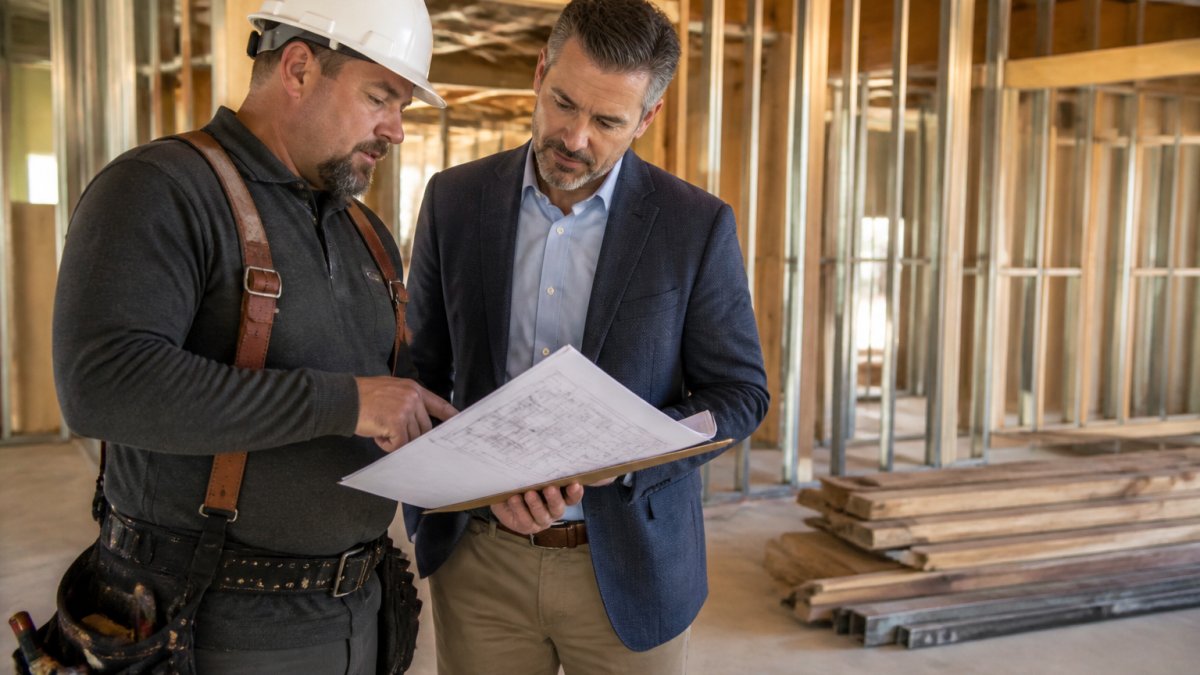
A skilled project manager maintains detailed schedules, tracks material deliveries, and coordinates trade sequencing. They conduct regular site inspections, document progress, and identify potential issues before they become expensive problems. Communication flows consistently between the contractor, your team, and subcontractors.
Budget management requires vigilant cost tracking. The project manager monitors expenses against the estimate, flags potential overruns early, and manages change orders systematically. When unexpected conditions emerge, they present options with clear cost and timeline implications so you can make informed decisions.
Get Started Today Free Estimate →
Quality assurance happens throughout construction. Regular inspections verify that work meets specifications and building codes. The project manager ensures subcontractors maintain high standards and address any deficiencies promptly.
Durable Flooring for High-Traffic Commercial Spaces
Flooring selection significantly impacts both durability and maintenance costs in commercial spaces. High-traffic areas demand materials that withstand heavy use, frequent cleaning, and equipment movement without deteriorating.
Concrete flooring offers exceptional durability for industrial and warehouse spaces. It resists heavy machinery, handles frequent cleaning, and requires minimal maintenance. Polished concrete provides an attractive finish while maintaining performance characteristics.
Luxury vinyl plank (LVP) has become increasingly popular in retail and office environments. It provides the aesthetic appeal of wood or stone while offering superior water resistance and durability. LVP handles foot traffic exceptionally well and simplifies cleaning and maintenance.
Ceramic tile works well in commercial kitchens, bathrooms, and retail spaces. It resists moisture, stains, and heavy traffic. Proper grout selection and sealing ensure longevity in demanding environments.
Epoxy flooring creates a seamless, durable surface ideal for commercial kitchens and industrial spaces. It resists chemicals, moisture, and heavy equipment while offering easy cleaning and sanitization.
Keeping Your Business Running During Remodeling
Minimizing business disruption during commercial remodeling requires strategic planning and clear communication. The contractor should develop a detailed schedule that identifies high-impact phases and coordinates around your peak operating hours when possible.
Phased construction allows portions of your business to operate while other areas undergo renovation. A skilled commercial remodeling contractor sequences work to maintain access to critical areas. They establish dust containment protocols, manage noise levels during business hours, and coordinate deliveries to avoid peak traffic times.
Clear communication prevents surprises and frustration. Your contractor should provide weekly updates, notify you of schedule changes in advance, and maintain a point of contact for questions or concerns. Established protocols for site access, parking, and coordination reduce daily friction.
Some contractors offer flexible scheduling options like early morning or evening work to minimize daytime disruption. Weekend or phased approaches work for certain project types. Discuss these possibilities during the planning phase.
How to Choose the Right Commercial Contractor
Selecting a commercial remodeling contractor requires evaluating experience, qualifications, and communication style against a consistent set of criteria. Rather than relying on gut feeling, use a structured evaluation checklist to compare contractors objectively.
Licensing, Insurance, and Legal Standing
Verify that any contractor holds a current general contractor license issued by your state licensing board. Request proof of workers' compensation insurance and general liability coverage with limits of at least $1 million per occurrence. Ask for a Certificate of Insurance naming your business as additional insured. Confirm the contractor has no unresolved complaints with the Better Business Bureau or state attorney general's office.
Relevant Commercial Project Experience
Review the contractor's portfolio specifically for commercial projects, not residential work. Request at least three references from completed commercial projects similar in scope, budget, and complexity to yours. Contact those references directly and ask: Did the project stay on schedule? Did costs remain within the estimate? How did the contractor handle unexpected issues? Did they maintain communication throughout?
Project Management and Communication Systems
Ask how the contractor manages schedules, tracks budgets, and communicates progress. Do they use project management software or weekly status meetings? How do they handle change orders, do they provide written documentation with cost and timeline impacts before proceeding? What is their process for addressing quality concerns or deficiencies?
Change Order and Contract Terms
Review the contractor's standard contract language carefully. Does it clearly define scope of work, timeline, budget, payment schedule, and contingency reserves? How are change orders documented and approved? What happens if the project encounters unexpected conditions (hidden structural damage, code violations, material delays)? A well-drafted contract protects both parties and prevents disputes.
Subcontractor and Trade Coordination
Ask which trades the contractor performs in-house versus subcontracts. Request a list of their regular subcontractors and ask if they can provide references from those relationships. A contractor with stable, long-term subcontractor relationships typically delivers better coordination and quality. Conversely, a contractor who constantly changes subcontractors may indicate quality or reliability issues.
Business Continuity and Disruption Management
Discuss how the contractor will minimize disruption to your operations. Can they phase work to keep portions of your business open? Do they offer flexible scheduling (early morning, evening, or weekend work)? What dust containment and noise management protocols will they implement? A contractor who proactively addresses business continuity demonstrates respect for your operational needs and reduces friction during construction.
Evaluation Checklist
Use this checklist when comparing contractors:
- ☐ Current general contractor license verified
- ☐ Workers' compensation and general liability insurance confirmed ($1M+ limits)
- ☐ No unresolved complaints with Better Business Bureau or state licensing board
- ☐ Portfolio includes at least three similar commercial projects
- ☐ References from past commercial clients contacted and positive
- ☐ Project management system clearly explained
- ☐ Change order process documented in writing
- ☐ Contract terms reviewed and understood
- ☐ Subcontractor relationships stable and verifiable
- ☐ Business continuity plan discussed and documented
- ☐ Communication style responsive and detail-oriented
- ☐ Pricing competitive but not suspiciously low
At Madrid Construction, we welcome this level of scrutiny. Our family-owned operation brings documented project management systems and a commitment to clear communication from initial estimate through final inspection. Contact us to discuss your commercial remodeling project.
Frequently Asked Questions
How do I choose a commercial remodeling contractor?
Start by verifying licensing, insurance, and local experience. Request references from recent commercial projects and ask about their approach to project management and communication. Interview at least three contractors, compare their commercial remodeling estimates in detail, and ask how they handle permits and code compliance. Choose a contractor who listens to your business needs, explains their process clearly, and provides a detailed written estimate. Avoid selecting based solely on the lowest bid.
What should a commercial remodeling estimate include?
A complete commercial remodeling estimate must list labor costs, materials, equipment rental, permits and inspections, timeline, payment schedule, and contingency allowances. It should specify the scope of work, design details, flooring selections, and any tenant improvements. The estimate should clarify what happens if unexpected issues arise and outline change-order procedures. Request itemized breakdowns so you understand where your budget goes. Avoid estimates that are vague or missing major line items.
How long does a commercial space remodel take?
Commercial renovation timeline varies by project scope. A small office refresh may take 4-8 weeks, while a complete buildout or major renovation can take 3-6 months or longer. Timeline depends on project size, complexity, permit approval time, material availability, and whether the space must remain operational during work. Your contractor should provide a detailed schedule during the commercial renovation timeline discussion. Always build in buffer time for permit delays or unforeseen structural issues.
How can a business keep operating during a remodel?
Effective commercial construction project management includes phasing work to minimize disruption. Contractors can work outside business hours, section off work areas with temporary barriers, or schedule major work during slower business periods. Discuss operational continuity with your contractor upfront and include it in your contract. Coordinate with your team on temporary relocation of equipment, customer access routes, and noise management. A contractor experienced with occupied commercial spaces will have strategies to keep your business running smoothly.